What actually happens from the moment you book a Botox appointment to the day your smoother skin settles in? A well-run cosmetic Botox procedure follows a clear, methodical path, from consultation and dosing to injection technique, aftercare, and follow-up, all calibrated for natural results.
I have sat with hundreds of patients in the chair, watched brow lines relax by millimeters, and fielded every question from “Will I still look like myself?” to “How long until I see results?” This is a realistic walk-through of a botox cosmetic procedure, drawn from day-to-day experience in aesthetic medicine, so you know what to expect and how to get the best outcome.
Why people choose Botox, and what it can and cannot do
Cosmetic botulinum toxin treatment, often called Botox, softens dynamic lines caused by muscle movement. Think frown lines between the eyebrows, horizontal forehead lines, and crow’s feet around the eyes. When a skilled injector places botox injections into these targeted muscles, the neurotoxin temporarily blocks signals that trigger contraction. The result is smoother skin, a more rested look, and a quieter, less “busy” upper face.
It is not a filler. Botox for wrinkles does not plump, fill hollows, or add volume to lips or cheeks. It also does not change skin texture overnight. If your primary concern is etched-in creases that remain at rest, deep volume loss, or under eye hollows, you might need fillers, devices, or skincare alongside botulinum injection. A frank conversation about Botox vs fillers clarifies which tool fits the job.
Within cosmetic practice, we also use related neurotoxins such as Dysport, Xeomin, and Jeuveau. The differences between botox vs Dysport, botox vs Xeomin, and botox vs Jeuveau come down to protein structure, diffusion characteristics, dosing units, and personal injector preference. Most patients can achieve similar botox results with any of these, given correct dosing and technique.
The consultation sets the tone
A good botox consultation starts with your goals. Be specific. Do you want softer lines when you smile without a frozen look? Are brow heaviness and headaches the issue? Are you curious about a subtle brow lift or a botox lip flip rather than fuller lips? Your injector should watch you animate: furrow, raise your brows, smile wide, squint, even talk and chew. Muscles do not act in isolation, and the best plan maps your unique patterns.
We discuss medical history, medications, allergies, pregnancy or breastfeeding status, prior neurotoxin treatments, and any previous botox side effects. We also talk timeline. If you are preparing for a major event, book your botox appointment at least 2 to 4 weeks before. Most patients begin to see changes by day 3 to 5, but ideal botox before and after comparisons come around days 10 to 14 when the effect stabilizes.
Cost comes up naturally. Botox cost varies by geography, provider experience, and whether pricing is per unit or per area. In the United States, a common range is 10 to 20 dollars per unit, and a straightforward upper-face botox procedure might use 30 to 60 units depending on anatomy and desired strength. Lower dose “baby botox” or a botox mini treatment reduces movement without a heavy look, often using 10 to 30 units total.
We also consider alternatives. Preventative botox for fine lines can help in late twenties or early thirties when lines start to stick around after expression. Micro botox, sometimes used for skin smoothing or pore minimization, places very dilute amounts more superficially, while traditional botox face treatment targets muscle. Skincare, retinoids, sunscreen, microneedling, or energy devices might be better if your first priority is skin quality, pores, or pigmentation.
Mapping the face: where Botox works best
The classics still anchor most treatment plans. Botox for frown lines between the eyebrows, the glabella, often offers the biggest visible change. Many patients habitually knit their brows when concentrating, which can convey tension. Relaxing the corrugator and procerus muscles here lifts the central brow slightly and softens the 11s.
Botox forehead treatment smooths horizontal lines, but dosing must respect brow position. Too much relaxation can drop the brows, which looks heavy and tired. This is where artistry matters. I often pair a conservative forehead dose with slightly stronger frown line treatment to preserve lift. Botox for crow’s feet around the eyes softens radiating lines and often brightens the lower eyelid area, especially in strong smilers.
Beyond the upper face, precise dosing can refine. Botox for bunny lines along the upper sides of the nose, botox for smile lines that come from hyperactive elevators, or botox around eyes for subtle under eye crinkling can be tailored. A botox eyebrow lift relies on selective weakening of brow depressor muscles to allow the frontalis to lift the tail. Make it too strong and the brows can arch cartoonishly. Keep it subtle and you get that “open eye” look that patients describe as a quiet lift.
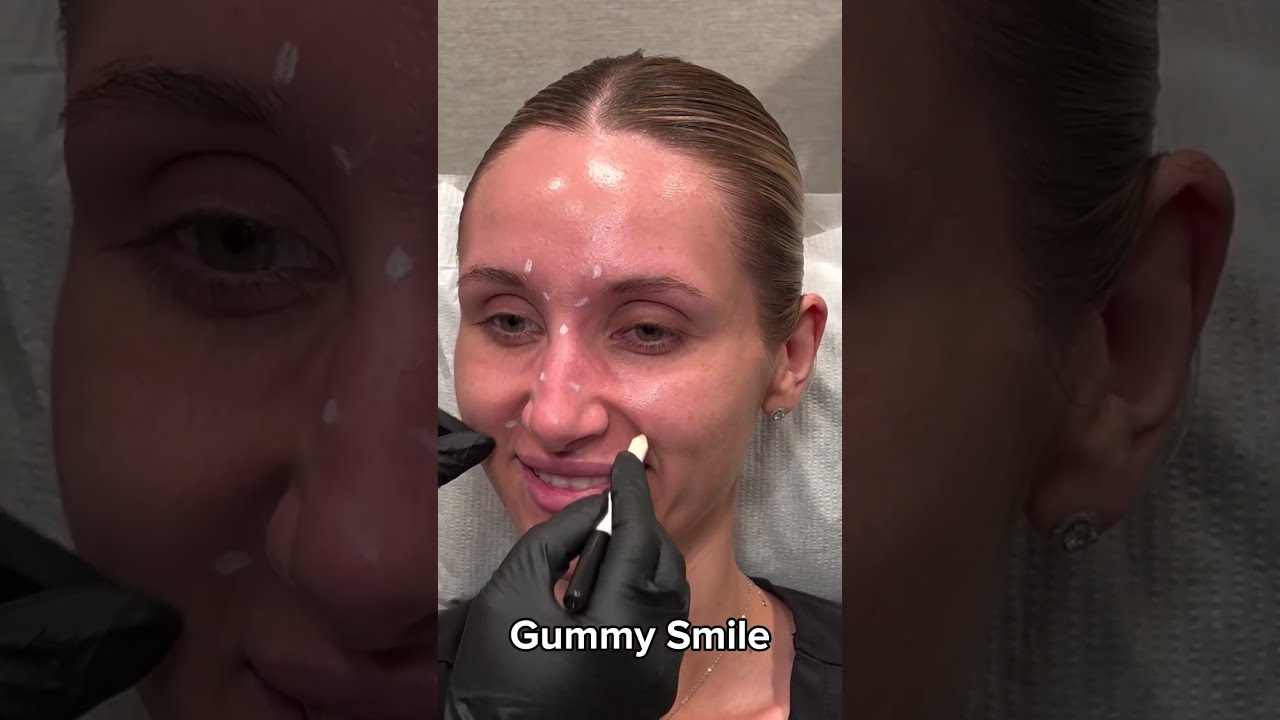
In the lower face, botox chin treatment can reduce an orange-peel, pebbly look by relaxing the mentalis muscle. For a gummy smile, tiny injections at the muscle that lifts the upper lip can reduce gum show without changing your smile’s character. A botox lip flip relaxes the orbicularis oris so the top lip ever so slightly rolls outward, showing more pink at rest. It does not add volume like filler, and some people dislike the fleeting “sippy cup” feel when whistling or sipping through a straw for the first few days.
Functional concerns sometimes overlap with cosmetic goals. Botox masseter injections along the jaw can soften a square jawline and help with clenching. Patients seeking botox for jaw clenching and botox therapy for bruxism often report reduced morning tension and fewer headaches within two to three weeks. Over multiple sessions, the masseter muscle can atrophy slightly, slimming the jawline. The dosing is higher here, and the effect partially depends on chewing patterns and nighttime clenching.
Neck bands, the platysma, respond to botox platysma bands treatment that can improve vertical cords and subtly refine the jawline. This demands conservative dosing and anatomical precision to avoid issues with swallowing or lower-face movement. A botox neck protocol is never “one size fits all”.
The day of your botox appointment
Plan to arrive with clean skin. Skip heavy makeup on the treatment areas if you can, or it will be removed before mapping. Arriving well hydrated, without a hangover, and having avoided aspirin or high-dose ibuprofen in the days before helps minimize bruising. If you bruise easily, consider arnica or bromelain as your provider advises, although evidence varies.
We start by reviewing the plan and marking injection points. On the forehead, we map horizontal line patterns and brow position. Between the eyebrows, we mark corrugator and procerus targets. For crow’s feet, we track how far lateral the lines travel when you give a full smile. For masseters, we palpate the muscle as you clench to find the bulkiest portions and avoid the parotid duct.
An alcohol or chlorhexidine cleanse preps the skin. If you are needle sensitive, a brief ice press or topical anesthetic can blunt the sting, though most patients find the quick pinches tolerable. A precise syringe and fine needle, often 30 or 32 gauge, deliver small aliquots per point. The whole procedure for an upper face botox cosmetic treatment typically takes 10 to 20 minutes.
Expect a few quick, shallow pricks. Some points may feel sharper, especially at the glabella or near the crow’s feet. Minor pinpoint bleeding is common and usually stops with light pressure. Tiny raised blebs at injection sites flatten within minutes. Patients often describe the sensation as a mosquito bite rather than real pain.
What the injector is balancing in real time
People sometimes assume injectors simply “follow a map.” Real practice looks different. Your anatomy, muscle strength, skin thickness, and habitual expressions guide dosing. Strong frontalis with a low-set brow needs a gentler forehead approach. Thick, active corrugators in someone who squints to read their phone often ask for a few extra units between the brows.
We also judge symmetry. Nearly everyone has a stronger side. One eyebrow often sits slightly lower. One eye may crinkle more. Small dose adjustments per side help. I warn patients that complete mirror symmetry is not the goal. Faces are naturally asymmetrical, and forcing symmetry can look odd.
Diffusion matters. Botox for crow’s feet placed too far inferiorly risks a heavy lower eyelid. Masseter injections placed too superficially or too close to the risorius muscle can change smile dynamics. For platysma bands, injections too laterally or too deep can influence swallowing or voice. These are rare when performed by skilled clinicians, but the caution explains why precise technique and anatomical fluency are nonnegotiable.
Aftercare that actually makes a difference
The minute you leave, the clock starts on aftercare. Visible effects won’t show for a few days, but what you do on day one can reduce complications.
- Keep your head upright for 4 to 6 hours. No bending deeply, lying flat, or inverting. Light walking is fine, but skip strenuous exercise until the next day. Avoid massaging or pressing on treated areas for at least 24 hours. Gentle cleansing is fine, but no facials, saunas, or hot yoga that evening.
Those two simple steps, plus skipping alcohol immediately after, can help limit bruising and avoid unwanted spread. If you do notice a small bruise, a cool compress for the first 24 hours and topical arnica can help. Makeup can be applied gently after a few hours once pinprick sites are closed.
The timeline: when botox results appear and how they evolve
Botox wrinkle smoothing is not instant. The neurotoxin binds over hours and blocks communication at the neuromuscular junction over days. For most patients, the sequence runs like this: day 1 feels normal, day 2 to 3 subtle softening starts, day 4 to 5 more noticeable reduction, and by day 7 to 10 the effect approaches its peak. Full stabilization often lands between days 10 and 14.
The look changes in character as well. Early days feel like “movement with resistance,” then certain expressions simply do not happen. The goal is not zero movement for most patients. Natural results show minimal lines at rest, softened lines in motion, and retained expressiveness. When done well, friends say you look rested, not “done.”
Longevity varies. A first-time patient may experience 2.5 to 3 months of visible effect, whereas seasoned patients, especially those on a regular botox maintenance schedule, often hold 3 to 4 months. Areas with smaller muscles or lighter dosing, like a lip flip, may last 6 to 8 weeks. Masseter treatments can last 4 to 6 months, sometimes longer, since the muscle is larger and dosing higher. Metabolism, activity level, and even how expressive you are can shift duration by a few weeks.
What can go wrong, and how we handle it
Most side effects are mild and short-lived: pinpoint redness, small bruises, transient headache, or a sense of heaviness that settles within days. Rare but real complications include eyelid ptosis if the product diffuses to the levator palpebrae superioris, or a peaked “Spock brow” if the center of the forehead is over-relaxed while the get more info lateral frontalis remains strong. These issues are typically managed with tiny corrective doses or simple time and reassurance. Eyelid ptosis is uncommon and usually resolves as the effect wanes, but your provider may offer eyedrops to stimulate a compensatory muscle while you wait.
There are also technique-specific risks. With botox under eyes or treatments around the orbicularis, overly aggressive dosing can change the way you smile or affect eyelid closure. Botox for jawline contouring or masseter reduction must avoid impacting the zygomaticus and risorius muscles that lift the smile. In the neck, overly lateral or deep platysma injections can affect swallowing. These events are unusual in experienced hands, and risk is minimized by conservative dosing, precise placement, and open communication.
Botox safety rests on three pillars: proper patient selection, correct dosing and placement, and realistic expectations. People with certain neuromuscular disorders, active skin infections, or those pregnant or breastfeeding should avoid botox therapy. Medications that increase bruising may need to be paused with your prescribing physician’s approval.
Special cases: beyond lines and wrinkles
Therapeutic botox has medical applications that overlap with aesthetics. Botox migraine treatment in the hands of neurologists follows a specific protocol and can reduce frequency and severity of chronic migraines. For botox hyperhidrosis, the neurotoxin reduces sweating by blocking the signal to sweat glands. This helps with underarms, palms, or soles for those with excessive sweating that impacts daily life. Some clinics also offer scalp “blowtox” concepts to reduce sweating on the scalp for patients whose hairstyles collapse during workouts, though this is a niche use and requires careful dosing.
There is growing interest in botox for oily skin, botox for pores, and botox for acne using micro-dosing techniques in the superficial dermis. The evidence is mixed and technique dependent. In my practice, I position these as optional enhancements for select patients, not core treatments. Skincare, retinoids, and energy devices often offer more predictable gains for uneven skin texture or large pores.
The touch-up window and maintenance plan
Around two weeks after your botox face treatment, I schedule a quick check. This is where we assess symmetry, strength, and whether small adjustments are needed. A touch up can add a couple of units to a stubborn line or to balance a stronger side. I prefer letting the initial dose fully declare itself before adding more. Overtreating at the outset risks a heavy or unnatural look.
For maintenance, consider a 12 to 16 week cadence. Some patients stretch to 18 weeks if they are comfortable with a gradual return of movement. Others prefer a tighter 10 to 12 week schedule if their lines recur briskly or if they are on camera often. There is no harm in allowing full movement to return before a botox refill, but treating before lines fully re-etch can maintain smoother skin over time. Preventative botox in younger patients hinges on this idea: reduce repetitive folding, and static creases form more slowly.
Cost, value, and where it adds up
Patients often try to minimize cost per visit, but the better metric is value per result over time. Skill matters more than price per unit. A superb injector using 32 units with thoughtful placement may deliver better botox benefits than a bargain session with 50 units scattered imprecisely. You are paying for assessment, mapping, technique, and follow-up, not just toxin in a syringe.
Expect that different areas carry different costs based on units used. A classic upper face can run a few hundred dollars to the low thousands depending on region. Masseter treatments, neck bands, or full face contouring with neurotoxin require more product and therefore more budget. Don’t be shy about asking for a written plan with typical units and a long-term maintenance estimate. Transparency prevents surprises.
What natural looks actually mean
“Natural” gets overused. In this context, natural results keep your expressions, soften lines that distract, and respect your facial identity. Forehead lines should be present when you are surprised, not when you are sipping coffee. Crow’s feet should suggest joy, not fatigue. A lip flip should gently expose more pink at rest without compromising function. Your brow arches should remain yours, only smoother. When patients bring inspiration photos, I ask what they like about the image: is it the glow, the relaxed brow, the smoother lower eyelids? Then we decide whether botox can deliver that, or whether a combination approach with skincare, fillers, or devices is smarter.
Comparing products without getting lost
If you have tried Botox and felt it wore off quickly, a switch to Dysport or Jeuveau may be reasonable. Some notice faster onset with Dysport, others prefer the feel of Xeomin, which is a “naked” toxin without complexing proteins. In practice, individual variation dwarfs minor product differences, and injector familiarity with a brand often determines outcome more than the label does. What matters is consistent reconstitution, accurate dosing, and precise placement.
The role of skin care and habits
Neurotoxin smooths lines from movement, but your skin still needs care. Retinoids, broad-spectrum sunscreen, antioxidants, and moisturizer remain the foundation of visible health. Dehydration, poor sleep, and smoking can undercut your botox aesthetic gains. Strong frowners who stare at screens all day with furrowed brows benefit from simple habits: raise your screen to eye level, use blue light filters, and take breaks that relax your expression. Good Botox reduces the habit loop, but daily posture and micro-expressions still matter.
A realistic before and after
Picture a patient with strong 11s, moderate forehead lines, and etched crow’s feet. We plan 50 units: 18 glabella, 10 forehead, 12 per side at the crow’s feet. Day 5, her frown softens and her eyes look brighter. Day 10, a friend says she looks rested. She still raises her brows, but the lines barely show. At week 12, movement returns, but lines are less etched than before treatment. Over four cycles in a year, the resting lines soften further, and the effect lasts longer, edging toward 14 weeks between visits. That is a typical botox rejuvenation story: gradual, compounding improvement.
What I tell every first-time patient
Set your expectations to subtle. If you love the first round, we can build in small increments. If you feel a bit heavy at first, that sensation often fades as you adjust and the dose settles. Always return for a two-week check if something feels off. Photos help with objective botox before and after comparison. Do not chase zero movement. Faces with absolutely no animation look flat on video and in person. The sweet spot is smooth at rest, restrained in motion.
Step-by-step summary of the procedure
- Consultation and mapping: define goals, assess expression patterns, agree on areas and estimated units. Prep and injection: cleanse, mark, ice if needed, then precise micro-injections in planned sites over 10 to 20 minutes. Immediate aftercare: stay upright a few hours, avoid rubbing, keep workouts gentle until the next day. Onset and peak: notice softening by days 3 to 5, with full result by days 10 to 14. Follow-up and maintenance: adjust if needed at two weeks, then repeat every 3 to 4 months based on goals and duration.
Where Botox fits in a broader plan
A mature aesthetic plan often blends treatments. Botox facial rejuvenation reduces movement-based lines. Fillers can address volume loss at the temples, cheeks, nasolabial folds, and chin. Devices improve laxity or texture. Skincare refines tone, pores, and glow. For men, dosing often differs due to larger muscle mass and preference for a flatter brow. For women, eyebrow shape and lateral brow lift options are common priorities. For both, natural enhancement remains the guiding principle.
If your primary concern is surface texture, uneven pigment, or scars, look first to skincare and devices. If your concern is folding from expression, Botox belongs at the center. If you want jawline slimming and relief from night grinding, botox masseter treatment can serve both function and contouring. If sweating undermines confidence in social or professional settings, botox for excessive sweating can be transformative for months at a time.
Final thoughts grounded in practice
The best botox cosmetic procedure feels almost uneventful in the chair and gratifying in the mirror two weeks later. It is an exercise in restraint and precision. The right dose, in the right place, at the right time, tailored to the way you express and the way you want to look. You leave able to emote, only without the lines that once broadcast strain.
If you are ready to try it, bring your goals, your calendar, and your patience for a quiet, steady transformation. Good aesthetic medicine is rarely dramatic on day one. It shows up in candid photos, in how makeup sits smoother on your forehead, and in the comments from colleagues who cannot pinpoint what changed, only that you look refreshed. That is the benchmark of natural results and the enduring appeal of well-planned, well-executed botox treatment.